
The $81.90 bid got hit and NEU promptly took off on increasing volume. Watch it around a hundred. Is the volume buying it or selling it?

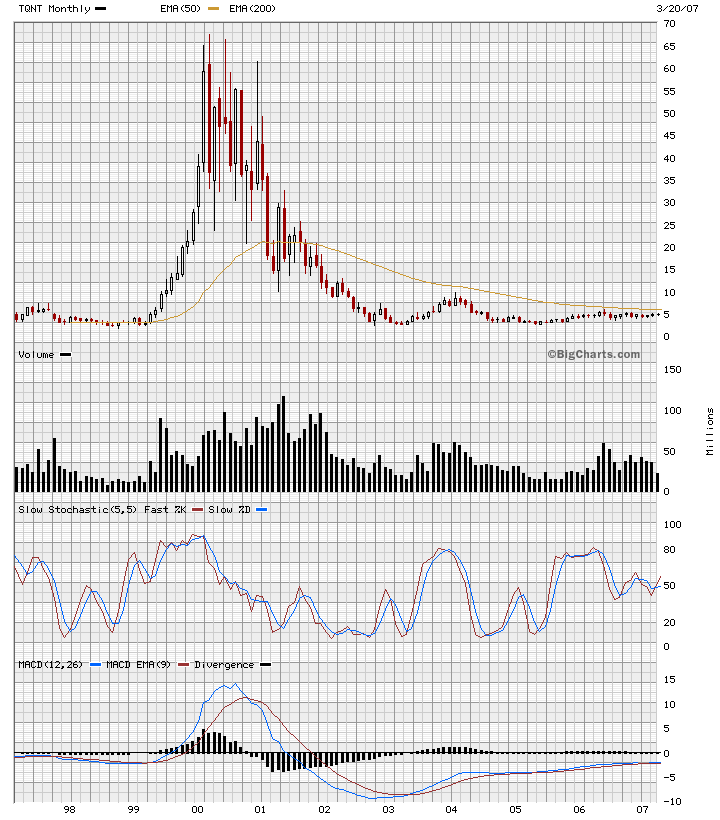 It was quite a ride during that red hot blowout year, and even more so for those that got too attached and didn't know the music stopped. Ouch.
  Of late things seem to be firming up. Let's keep this just between you and me.
There are two reasons behind the NYSE threat, according to Perfumo. First, NYSE can afford to buy another exchange-and the CBOE is preparing to go public. And second, NYSE has a scalable trading platform, which allows for consolidation. Without a scalable electronic platform, consolidation makes little sense.
"Clearly, New York wants to increase its market share and may have to buy an exchange and merge it with the P-Coast," says Meyer ("Sandy") Frucher, chairman of the Philadelphia Stock Exchange. "If Nasdaq wants to get into the game, they will have to buy somebody as well."
Repetto calls NYSE Arca Options a "new competitor with deep funding." Its recent aggressive fee reductions for market makers are a sign of its ambition.

That deal sparked a wave of consolidation -eat or get eaten. The name of the new game is volume: The more trades flowing through your electronic platform, the more revenue. Now the mega-exchanges are each trying to dominate its niche of global trading. The result will be monopolistic empires that keep adding complementary pieces. "The way I think about it," says S&P analyst Jason Willey, "it's a huge land grab."

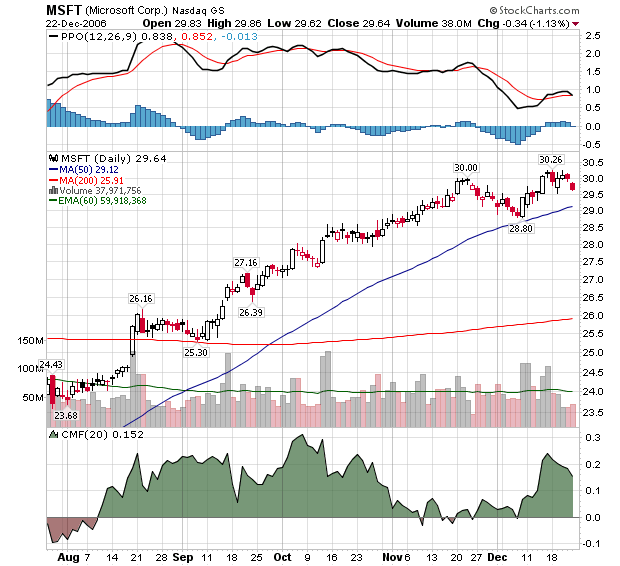

...For now, folks may actually think that the Fed will fight inflation. So, days like last Wednesday lead to "Fed's gonna be tough" talk. Which is why metals can go down in a session when inflation fears are running on the high side.
Setup for metals' gain, stocks' pain
Nevertheless, as the vise tightens down the road -- i.e., inflation is still not under control, but the economy is clearly slowing down -- you can be sure that the Fed will opt for rationalizing inflation, in the (futile) hope of not presiding over a nasty downturn. That will be the moment in time when the metals (and foreign currencies) really go wild to the upside.
Meanwhile, I believe that the path of least resistance for equities will now be down in the short run. And when we get the next rally, I would expect it to fail, since I firmly believe that the top of this three-year-long bear-market rally has finally been seen.
"With the Asian markets all slumping, recent bearish sentiment, which initially began with caution over more (possible) U.S. rate hikes, has gotten worse and worse," said Samsung Securities analyst You Sung-min. "The (BOK) rate hike was just one more on top of layers of negative factors."
South Korean banks were hit hard by the rate hike, fueling worries of a possible cooldown in South Korea's sizzling property market and concern over whether the economy is strong enough to sustain higher borrowing costs.
The losses came after stocks dropped on Wall Street Wednesday, extending investors' losses for a third straight session and pushing the Dow Jones industrial average below 11,000 for the first time since March 9.

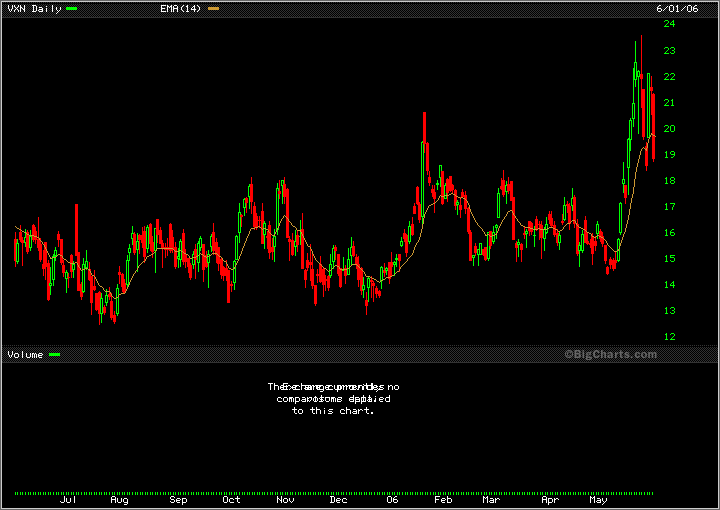
NEW YORK (Reuters) - The member-owned American Stock Exchange said on Thursday it intends to convert into a for-profit corporation and likely move toward an initial public offering -- becoming the latest exchange to revamp its structure as investor demand for the sector heats up.
CHICAGO, March 23 (Reuters) - The shares of two high-flying financial exchanges, International Securities Exchange Inc. (ISE.N: Quote, Profile, Research) and CBOT Holdings Inc. (BOT.N: Quote, Profile, Research), plunged on Thursday in profit-taking and worries about competition.
ISE, the largest U.S. equity options mart, led the way as it continued a steep decline from its March 15 high of $52.84.
But CBOT finished as the day's biggest loser on the New York Stock Exchange after analysts at Jefferies & Co. said some profit-taking should not come as a surprise for the parent of the No. 2 U.S. futures mart.
"Consolidations and alliances among our current competitors may create larger liquidity pools than we offer. The resulting larger liquidity pools may attract orders away from us, leading to a decline in our trading volumes and liquidity, which would lead to decreased revenues," ISE said.
ISE also said that, with other exchanges now running hybrid open-outcry/electronic trading systems, "certain qualities of our market are becoming more common."
As competitors improve their market quality, "commoditization of electronic trading in the options industry may begin, which could lead to an increase in price competition," the company said.
According to the most recent monthly report from the World Federation of Exchanges, the NYSE and Nasdaq combined had $16.9 trillion out of the world's $41 trillion in stock market capitalization in December 2005, or 41.2 percent of the world's total. That's impressive. But it's down sharply from January 2001, when the NYSE and Nasdaq combined held 48.4 percent of the world's stock market capitalization.
This was the third bid received by the LSE in 15 months and its rejection of Nasdaq's offer fueled speculation it might not be the last, with the New York Stock Exchange -- the world's largest stock exchange and Nasdaq's arch rival -- rumored as a potential buyer.
Nasdaq's approach comes just two days after the NYSE Group Inc. (NYSE:NYX - News), owner of the Big Board, went public by sealing its purchase of electronic rival Archipelago Holdings.
But Repetto expects the NYSE to come up with a rival offer and thinks that among U.S. players the Chicago Mercantile Exchange Holdings Inc. (NYSE:CME - News) could be a "longshot" to put in an offer.These newly public companies now have a pile of cash and their own stock, with which to buy other exchanges and catch their competition napping.
Margaret Nagle, a spokeswoman for Archipelago, said the Pacific's electronic option-trading, which now uses a system called PCX Plus, will change to an entirely new electronic trading platform in the middle of this year, to be based on Archipelago's technology. "The new platform that we're rolling out includes there being a physical (trading) floor," she said.
In response to conjecture that the trading floor might close this year, she said: "I know nothing of any plans of it being phased out in the near future, meaning anytime this year. That would be news to me. My understanding was that the floor, I can't say will remain in place in perpetuity, but there are no plans to phase it out this year."
Thain has expressed confidence in the hybrid program and appears to be poised to take advantage of the exchange's newfound independence from its seat holders. The former Goldman Sachs president hopes to expand the NYSE's offerings to include derivatives trading, including equity options side-by-side with sales of the stocks themselves, as well as corporate bond trading.
In the future, it's possible that floor traders could not only trade NYSE-listed stocks, but also those listed on the Nasdaq. With NYSE-listed stocks already electronically traded on Nasdaq, as well as Archipelago, the NYSE could not only retain some of its own market share, but also eat into Nasdaq's.
Thain has also said he is still considering expanding the NYSE's operating hours in order to compete with European markets, though that has run into some resistance from traders on the West Coast, who are already in the office at 6:30 a.m. Pacific time for the opening bell.
Alternatively, the NYSE could go after the Chicago Board of Options Exchange or the International Securities Exchange in order to get a bigger piece of the options and derivatives trade.


